Saturday, December 5, 2020

Elephants: the biggest land mammals


General Description:

Elephants are large, herbivorous mammals. They are very intelligent animals. They can feel emotions such as compassion, grief, and selflessness; they can also imitate others, use tools, and they display self awareness. Elephants are crepuscular, which means that they are mostly active during dawn and dusk, and sleep during the day. They have large bodies, with big ears, a trunk, and some have tusks. They use their trunks to pick up objects, communicate with sounds, suck up water to drink or give themselves trunk showers, and more. Elephants with tusks use them to protect themselves and some males use their tusks to fight. They can also use their tusks to collect food, lift and move objects, and strip the bark off of trees. Elephants are actually left or right tusked, sort of like how humans are right or left handed. They don’t sleep a lot, as they spend up to 18 hours eating. They can eat up to 300 lbs of roots, grass, fruit, bark, and other plant matter in one day, and for this reason they need a lot of space to live.

Each elephant herd is led by a matriarch that is typically the biggest and oldest female in the herd. Males leave the herd when they reach puberty, and either live alone or with a small group of other males. After they leave, they don’t really interact with the herd except to mate. Female elephants have one calf every 4-5 years, and they have a 22 month pregnancy. The whole herd of related females help each other care for calves. 


African Elephant: 

There are two main species of elephants: African elephants and Asian elephants, each of which are further divided into subspecies.The two major subspecies of African elephants are the African forest elephants and the African savanna elephants (also known as the African Bush elephant). African elephants can live up to 70 years. They are 8.2 to 13 feet tall, and weigh between 2.5 and 7 tons. Calves weigh about 200 lbs and stand up to 3 feet tall. African elephants are typically larger than Asian elephants, and have larger ears. Both male and females have tusks that continuously grow. Their trunk is essentially a long nose, containing 40,000 muscles. The trunk has two features on the end that act like fingers to help them pick up objects.

African elephants are a keystone species for many reasons. A keystone species is a species of animal that is vitally important to their ecosystem. African elephants can use their tusks to dig holes in the ground for water during the dry season, which creates watering holes that other animals can use. The seeds in their waste helps plants to spread, and their waste also provides a habitat for dung beetles. The African forest elephants eat so many plants that they create pathways that other animals can use. African savannah elephants also uproot trees and eat saplings, which creates open landscape for animals that live on plains. 

Asian Elephants:

Asian elephants have slight differences from African elephants. They can live up to 60 years. They are 6.6 to 9.8 feet tall, and weigh between 2.25 and 9.8 ft. Asian elephants have smaller, rounder ears than African elephants, and they live throughout Southeast Asia.They also only have one finger-like feature on their trunk. In addition, only some male Asian elephants have tusks.


Threats to Elephants:

Human activities pose a great threat to elephants. The IUCN Red List states that African elephants are vulnerable, as there are about 400,000 African elephants left in the world. This might seem like a lot, but it really isn't. After all, the human population is well over 7 billion, and it’s still growing. It has also been estimated that there were 26 million African elephants before European colonization in Africa. One of the biggest threats to African elephants is poaching, as many are killed for their ivory tusks. While the Convention on International Trade in Endangered Species of Wild Fauna and Flora (CITES) banned ivory trade internationally in 1989, poaching still continues since tusks are illegally traded. A census from 2016 showed a 8% elephant decline per year, which is about 27,000 elephants. Part of the problem is the long time it takes elephants to reproduce. A second threat to elephants is habitat loss. Elephants need a lot of space to support the enormous amounts of food they eat. As elephants lose more and more habitat, they need to go closer to humans in order to find enough food. Sometimes they have to cross human development in order to obtain food due to fragmentation (when a habitat is divided into sections by human development and/or settlement.)

Asian elephants are even more threatened than African elephants. The IUCN Red List states that Asian elephants are endangered. The Asian elephant population has declined by about 50% over the last 75 years! There are only about 20,000-40,000 Asian elephants left in the wild. They are less threatened than African elephants by poaching since many don’t have tusks, but they are greatly threatened by habitat loss. Some people also hunt them to trade elephant skin. 


Elephants in Captivity: 

About ⅓ of Asian elephants are in captivity, where they live in terrible conditions. So many elephants are shown off to make money from tourism, and this leads to many trafficked young calves. In 2012, Thailand limited the smuggling of Asian elephants, but it is still a huge problem. Elephants are trained to give shows, rides, and to interact face-to-face with tourists. They are usually tamed with fear. For example, many trainers use bullhooks, which is a wooden stick with a sharp metal hook on one end. They introduce phajaan, which is the process of breaking an elephant’s spirit to tame them. Elephants that need to be tamed are hit with a bullhook, bound with ropes, confined to small spaces, or starved. Captive elephants in Thailand are abused with isolation, malnutrition, and are sometimes physically abused (here is a video that talks about elephant captivity: Inside the Dark World of Captive Wildlife Tourism | National Geographic). There aren’t many protections for captive elephants. Many times, elephant keepers tell tourists that the elephants are treated well, when they might be bound with spiked chains the whole day. It is truly horrifying how some tourism places treat elephants, along with other animals (see my article “The Debate on Zoos: Pros and Cons” for more information on zoos).


Efforts to help save elephants:

There are two ways to limit poaching: prevent poachers from killing elephants and limiting the demand for ivory so poachers don’t have a motive to kill elephants. For the first method, many organizations have been trying to develop technology to identify and stop poachers in national parks and other protected areas (here is a link to an article about WWF’s efforts to use tech to stop poaching: WWF develops a new technology to stop poachers in their tracks). A problem with this is that it is difficult to keep such a system running for a long time, and even more difficult to stop poaching outside of national parks. It will also be a struggle to implement systems like this into other national parks that have poaching problems. However, this is a good start and I’m sure that more progress will be made.

As for the second way of limiting poaching, there are a few ideas as to how to limit the demand for ivory. In 2015, China instituted a “near complete” ban on domestic ivory trade, which led to a fall in the demand for ivory. Similar bans could have a profound effect. 

In addition, many groups campaign for the better treatment of elephants in captivity. A few places treat elephants well, and the elephants are not forced to interact with humans. Hopefully, if enough people support movements to help elephants in captivity, more zoos and elephant tourism places will start to treat elephants humanely.


How you can help:

  1. Support any petitions or movements you hear about to help elephants in captivity

  2. Be informed: many tourists view elephants and believe their keepers/trainers when they say that the elephants are treated well. Many believe this, and don’t realize that the elephants they are so excited to see are being forced to interact with them. 

  3. Don’t buy ivory products, which increases the demand for ivory

  4. Donate to causes that are trying to limit poaching and the bad treatment of elephants in captivity

Current Events:

Some elephants are actually evolving to have no tusks. This, of course, allows them a better chance of survival as poachers don’t have a reason to kill them for ivory. Here are two articles with more information:

  1. Under poaching pressure, elephants are evolving to lose their tusks 

  2. African elephants are evolving without tusks because of poaching  

Hundreds of elephants in Botswana have died suddenly, and nobody knows why. Here are two links for more information. The first one details the problem, and the second talks more about the current information scientists have collected.

  1. 350 elephants drop dead in Botswana, some walking in circles before doing face-plants 

  2. https://fusion.inquirer.com/news/nation-world/botswana-elephants-dead-toxin-cyanobacteria-20201010.html 

Sources:

  1. Protecting the African Bush Elephant 

  2. Elephant | Species 

  3. Asian Elephant 

  4. African elephant, facts and photos 

Wednesday, November 11, 2020

Whales: Part of the Cetacean Family

Cetaceans is a family of large marine mammals, consisting of whales, dolphins, and porpoises. Whales are huge animals that are viewed as living marvels. But other than their large size, they are actually similar to humans in several ways. Whales are warm-blooded mammals with a thick, insulative layer of blubber, or fat. Just like humans, whales drink their mother’s milk during their childhood. Whales can also make friends, grieve, and feel many other emotions.

There are two main groupings of cetaceans: mysticetes and odontocetes. Mysticetes are whales that have baleen, or bristle-like formations in their mouths that strain the food from the water. Baleen is made up of proteins, the same proteins of which fingernails and hair is formed from. The color, size, and number of baleen plates is unique to each species. They mostly eat plankton, krill, and small fish. There are three types of mysticetes, skimmers, gulpers, and suckers, classified by how they obtain food. Skimmers swim through patches of plankton or other sustenances with open mouths, letting their baleen catch and trap the food. Gulpers have pleats that fill up with water before pushing it through their baleen to capture food in the water. Suckers, as their name implies, suck amphipods (a type of crustacean) from the bottom of the ocean. They also suck up tons of mod and water along with the food, so they force the mixture through their baleen to strain out the amphipods. 

Odontocetes is the other main group of cetaceans, containing all whales that have teeth. Dolphins and porpoises are also included in the odontocetes category. Toothed whales often eat larger fish, squid, octopus, and more. Even though they eat much bigger prey, odontocetes are usually smaller than mysticetes. However, the toothed whales don’t use their teeth for chewing. They often swallow their food whole, or in big pieces. The tusk of a narwhal is actually one giant tooth! Odontocetes commonly use echolocation to find prey. Echolocation is the way some animals locate objects or other organisms by listening to echoes, or reflected sounds. 

The blue whale is a well-known mysticete, famous for being the biggest creature to live on Earth ever. They can grow up to 98ft long and weigh up to 200 tons. Imagine, most humans aren’t even 6 feet tall! And humans don’t just eat small foods like krill. Blue whales from the southern hemisphere are usually larger than those from the northern hemisphere, and females tend to be bigger than males. Newborns can be 23ft long, and up to 3 tons. During the first 6-7 months, the babies drink over a 100 gallons of their mother’s fatty milk every day. Their diet of milk leads to babies putting on 250lbs of weight every day! After those first 6-7 months, the whales have gotten twice as long and don’t need their mother’s milk anymore. Blue whales typically stay with their mothers for about the first year of their life, and fully mature at 5-10 years. Like humans, they live for about 80 years. 

  Many types of whales are endangered because of commercial whaling, which is hunting whales to sell products such as meat, oil, and fats. For example, the heads of sperm whales contain large amounts of spermaceti, a type of oil. This oil is valuable as lamp fuel, and can be used to make other products like creams. Many sperm whales were killed for the oil. Now, new threats endanger whales, such as plastic pollution. Abandoned or lost fishing nets are a large portion of the plastic pollution in oceans worldwide. Whales and many other marine animals often get tangled in fishing nets in the ocean, and are injured or killed as the nets restrict their movement. Some fishermen simply cut their fishing nets when an animal gets tangled in it, leaving them to die. You can help the whales and other marine animals by speaking against the harm that humans perpetrate. We also need to start trying to adapt our technology to lessen its impact on the environment. Some companies are trying to develop biodegradable nets, or nets that have technology that allow fishermen to track them (here is an article on a more environmentally-friendly net: http://www.takepart.com/article/2014/11/19/biodegradable-gps-tagged-fishing-net-could-help-save-dolphins-and-whales). But a big problem for producing these products is that not many people buy them, as they rather buy products that are cheaper but aren’t environmentally-friendly. You can also help out by supporting laws and petitions that would benefit whales, and donate to whale charities. 


There are over 90 species of cetaceans. Here are some examples.

Odontocetes

Mysticetes

  • Sperm whale

  • Beluga whale

  • Narwhal whale

  • Long-finned pilot whale

  • Covier’s beaked whale

  • Northern bottlenose whale

  • Melon-headed whale

  • All dolphins and porpoises

And many more!

  • Blue whales

  • Grey whales

  • Bowhead whales

  • Humpback whales

  • Fin whales

  • Sei whales

  • North atlantic right whale

  • Southern right whale


And many more!


For some reason, there have been some major whale strandings occurring. Hundreds have already died. This is a devastating blow, especially since some whale populations have already declined drastically. Here are some links to articles where you can get more information:

  1. https://www.cnn.com/2020/09/22/australia/tasmania-pilot-whale-stranding-intl-hnk-scli/index.html 

  2. https://www.cnn.com/2020/09/23/australia/tasmania-whale-stranding-new-pod-intl-hnk-scli/index.html 


To help out the whales, you can donate to the Whale and Dolphin Conservation through this link: https://adopt-us.whales.org/shop/donate-today/ 


Sources:

  1. https://us.whales.org/ 

  2. https://www.dfo-mpo.gc.ca/species-especes/mammals-mammiferes/cetacean-cetaces/info/index-eng.html 

  3. https://www.worldwildlife.org/species/whale 

Sunday, October 4, 2020

The Debate on Zoos: Pros and Cons


    As you can see in the picture, the tiger is being kept in a cage where it can be stared at by humans. In solving some environmental issues, zoos can be a good solution. However, there are many zoos that prove harmful to the animals while providing little assistance to environmental efforts. Here are some pros and cons of zoos.

Some zoos are actually very helpful in protecting animals. Zoos can teach all their visitors about the animals and help spread awareness about world wide environmental issues. Millions upon millions of people visit the zoos in the United States and learn all about the animals. Zoos can also help scientists study animals. Sometimes, research on diseases in animals leads to knowledge on human illnesses or can even alert scientists to new diseases. Scientists can also build tech that mimics an animal in some way, which can help with many of today’s problems. One of the most important benefits of zoos is that they can help save endangered species. All the species that are going extinct because of humans can be provided for in zoos, without danger of being killed from poaching or hunting.

While zoos can be useful, there are plenty of cons to zoos too. Many zoos don’t treat animals right, by giving them the wrong food, leaving their enclosures dirty, and by not providing them with the means to live their lives properly. For example, many animals need a very large amount of space to live. Wild polar bears have home territories of over 1,500 miles. At most, an enclosure is a couple acres. Many animals also show unnatural behavior, such as twitching or teeth grinding. Some are diagnosed with clinical depression, OCD, anxiety, and more. Because of these problems, many animals live much shorter lives in zoos than in the wild. Polar bear infants have a mortality rate of 65%, and many animals get overweight or spend too much time indoors. Some might say that the damage zoos do to animals aren’t worth the knowledge that zoos bring to humans. Those who do not support zoos argue that zoos cannot provide their animals with the means to live properly.

  The debate on the use of zoos continues to be a pressing issue. I personally think that zoos should only be used in emergency situations. Zoos should help protect species from going endangered or extinct. In addition, zoos can be used to house animals that have disabilities or have adapted too much to human care. Even in those situations, I think zoos should only be allowed if they have relatively good conditions. A good example of an appropriate zoo would be the San Diego Zoo Safari Park. At the safari park, animals are treated well. They get enough food, time outside, socialization, and space. While the zoo cannot be expected to provide 1,500 miles of space for animals like polar bears, it has 1,800 acres of land for enclosures, which is pretty spacious as zoos go. The zoo also tries to release their animals back into the wild. However, some have questioned the San Diego Zoo’s breeding practices, which goes to show that no zoo is ideal. But all in all, I do think zoos that only house animals that need it and have fairly good conditions such as the San Diego Safari Park should be used.


My sources

  1. https://www.procon.org/headlines/zoos-top-3-pros-and-cons/

  2. https://zoo.sandiegozoo.org/about/about-san-diego-zoo 


Inspiring Related Article: https://www.nytimes.com/2020/08/09/science/coronavirus-elephants-wildlife-zoo.html?referringSource=articleShare 


Sunday, August 30, 2020

Polar Bears

2 polar bear cubs in a den. 

A starving polar bear trying to hunt.


https://youtu.be/_JhaVNJb3ag: This is a video on a starving polar bear, dying because of climate change.


Polar bears are fascinating creatures that live in the Arctic and various northern countries. They are known by many other names, including sea bears, ice bears, and the white sea deer. Polar bears are famous for their ability to thrive in a severe Arctic environment.

Polar bears depend on the sea ice to live. They hunt Ringed seals by waiting at holes in the ice that seals have made to breathe. When a seal surfaces, the polar lunges and kills it before the seal can dive back underwater. Their diet of seals gives polar bears a thick layer of fat, which protects them from the cold and also serves as an emergency source of energy.

Just like humans, polar bears sleep about 7-8 hours a day, in addition to the naps they take. Sleeping helps conserve energy, since they sometimes cannot eat for several days. They also communicate with each other, using body language, various noises, and scent markings. They can display their emotions, show aggression, and even beg another polar bear to share their food (this link is to a page on the Polar Bears International website that details their communication more in depth: https://polarbearsinternational.org/polar-bears/behavior/).

While polar bears have adapted to a harsh environment, their population is starting to decline. The three main causes are habitat loss, global warming, and human interference. The Arctic National Wildlife Refuge is a crucial habitat for them, but there are many proposals to drill for oil and gas there. Such drilling could destroy their habitats and lifestyle, especially if there is an accident such as an oil spill. However, the biggest threat to polar bears is global warming. As thicker layers of greenhouse gases surround Earth’s atmosphere, the entire planet starts to heat up, particularly the Arctic. The sea ice is melting, making it difficult for polar bears to hunt. The whole polar bear population is starting to starve as they are unable to catch seals. Polar bears are very gifted at swimming, but many of them have died or lost their young as they swim huge distances looking for sea ice. The long swims are also depleting their body fat, which subjects them to the cold.

In order to save the polar bears, humans have to drastically lower the amount of greenhouse gases we release. You can help by planting trees and limiting the amount of energy you use (see my post called 10 Easy Tips to be More Green for more tips on how to lower global warming).


These are two places where you can donate to help save the polar bears:

  1. https://defenders.org/

  2. https://polarbearsinternational.org/


Source: https://polarbearsinternational.org/


Thursday, August 13, 2020

Water Pollution


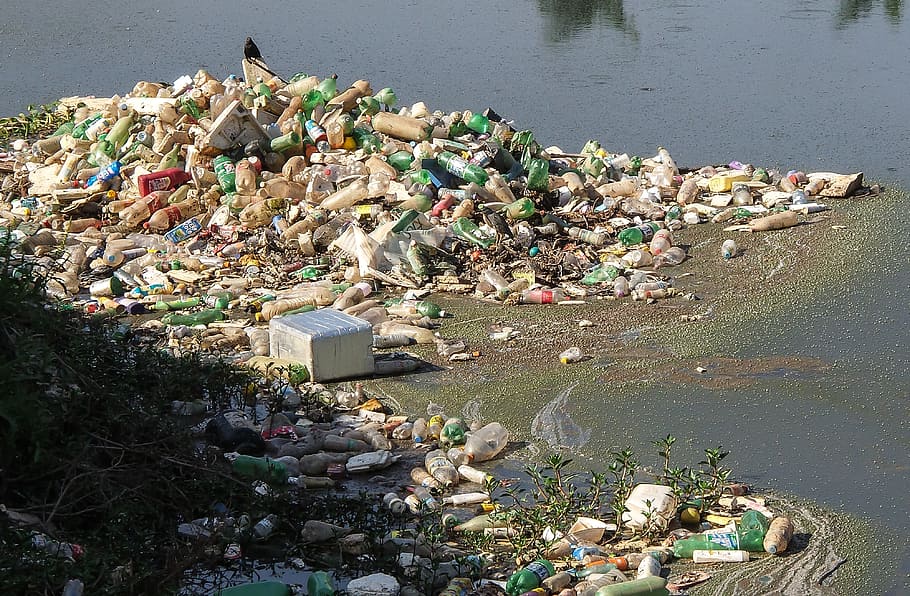
HD wallpaper: waste floating on water, Trash, River Pines, Rubble, Pollution  | Wallpaper Flare   

 Water pollution occurs when a body or source of water is polluted until it is harmful to humans as well as the environment. It threatens ecosystems around the world, as all living creatures need water. Groundwater, fresh surface water, and oceans have all become polluted.

    Groundwater is just what it sounds like, water that is underground. An aquifer is an underground area of porous rock that holds groundwater. About 40% of Americans rely on aquifers for a source of fresh water. Aquifers can be polluted by runoff that has seeped into the ground. They can become contaminated by fertilizers, pesticides, sewage, particles from the trash, and much more, polluting the entire water source. Once an aquifer is polluted, it can be unusable for decades to millennia. In addition, groundwater that leads into other bodies of water will spread the contaminants.

Bodies of fresh surface water include lakes, rivers, and ponds. Roughly 60% of Americans use these sources of freshwater for their everyday needs. Many rivers, streams, and lakes are no longer usable for safe swimming, drinking, or fishing because of water pollution. Litter is a very pressing concern, though runoff is the most significant cause of pollution for fresh surface water. Nutrients from farm runoff can cause plants to reproduce faster, thus throwing the ecosystem off balance. Animals that eat the plants will also have increasing populations until they eat all of the plants and start dying off. Also, bacteria will use more oxygen as they decompose the larger amount of dead plants, which causes oxygen levels in the water to drop.

Oceans are also becoming very polluted. The vast majority of marine pollution occurs on land, as chemicals, nutrients, litter, and more are washed into the sea. Plastic and other materials can enter the ocean by storm drains, sewers, and wind. Litter that ends up in the ocean can choke or restrain animals if it gets caught on them, not to mention severely harm animals that accidentally eat it (this is an article about a whale who died because it ate plastic: https://www.cnn.com/2019/03/18/asia/dead-whale-philippines-40kg-plastic-stomach-intl-scli/index.html). 

Oceans are also polluted by oil spills. In 2010, the largest oil spill in history occurred. It is known as the Deepwater Horizon oil spill. It still affects the Gulf of Mexico’s ecosystem. Tons of wildlife died, as the oil influences the animals’ abilities to regulate their body temperature, to move freely, to float on the water, and much more. Many animals also died because they ingested some of the oil. (This article talks more in detail about the Deepwater Horizon oil spill: https://www.britannica.com/event/Deepwater-Horizon-oil-spill)

Everyone can help lower water pollution. Avoid using a lot of plastic and don’t use harmful pesticides and fertilizers on your gardens. Dispose of trash and harmful contaminants properly, so they don’t end up in the water. You should also check that your cars, septic systems, and more are working properly so that they don’t leak contaminants. Lastly, don’t forget to pick up your pet’s waste!


Another article concerning water pollution: https://www.cnn.com/2020/08/05/world/dolphins-whales-chemical-poisoning-scn/index.html


SOURCES: 

  1. https://www.britannica.com/event/Deepwater-Horizon-oil-spill

  2. https://www.nrdc.org/stories/water-pollution-everything-you-need-know


My thanks to Victoria for helping me edit this post!!

10 Easy Tips to be more Green!


  1. Reduce, Reuse, and Recycle: There are so many easy things you can do to reduce, reuse, and recycle resources. A few examples are listed below.

    1. Reduce - Use reusable plates, utensils, and other objects instead of plastic and paper ones to reduce the amount of trash you throw out. 

    2. Reuse - Upcycling clothes is another way of reusing things. Just take some old clothes and add a patch or something to make it like new, instead of buying more clothes.

    3. Recycle - just recycle everything that you can! Bottles, cardboard, paper, and more are all recyclable. 

  2. Don’t Litter: Litter negatively impacts the environment in so many ways. Dispose of your trash in recycling and garbage cans.

  3. Turn off Lights and Electronics When not in Use: It is very easy to just turn off electronic devices  that you are not using. This will significantly reduce the amount of energy you use.

  4. Plant trees and other plants: Trees get rid of many harmful greenhouse gasses and produce oxygen.

  5. Donate: Instead of throwing your old possessions away, donate old clothes, blankets, food, toys, and other items to charities, thrift stores, shelters, etc.. This will reduce waste and will provide resources for others in need.

  6. Raise Awareness: Spread awareness about environmental issues and how to help!

  7. Limit Use of Vehicles: Try to walk, ride a bike, or carpool to conserve fuel and reduce pollution.

  8. Limit buying/using things that take from or harm the rainforests: Every minute, about 50 football field’s worth of forest is cut down. Rainforests absorb most of the greenhouse gases in the environment. They are also the source of so many necessities, such as wood and food. Additionally, hundreds of species live in and depend on rainforests. Limit the things you take from the rainforest! 

  9. Regularly check and maintain cars and septic systems: Make sure to regularly check that cars, septic systems, and many other things around the house are working properly. Cars that leak oil, septic systems that release sewage runoff, and more severely harm the environment. A leaky toilet can waste a lot of water.

  10. Additional Ways to help out: You can help pick up litter, donate money to environmental charities, and encourage others to live greener lives!

Thank you, Victoria, for helping me edit this post!

Tuesday, July 21, 2020

Bees - The World's Pollinators


Picture Source (the website that the picture is from)

Many people see bees as just little annoyances that sting, but bees are actually incredibly hardworking and organized. There are about 20,000 different species of bees. Bees live in colonies, each with a queen bee, worker bees, and drone bees. The worker bees and queen bee are all female, while drones are male. The worker bees do basically all the work. They clean, collect nectar and pollen for food, and raise the offspring. The drones and the queen bee only have one job: to reproduce. The drones are just meant to mate with the queen and fertilize the queen’s eggs.
To produce food efficiently, bees use a waggle dance to tell other bees if they found a good site for collecting nectar. This is a short video explaining how the waggle dance works: https://youtu.be/12Q8FfyLLso.
Bees are an essential part of the ecosystem. When the bees fly from flower to flower, they spread pollen to different plants. This results in pollination, which allows a plant to reproduce. Bees and flowers have a symbiotic relationship (a relationship that benefits both species involved), as the flower provides a food source for bees and bees help plants to reproduce in return. Without bees, a large amount of the plants we eat daily will not be able to grow and reproduce.
Bees populations are rapidly declining, mostly due to pesticides and habitat loss. Many of the pesticides that people use on their gardens are poisonous to bees and have huge impacts on bee colonies. In addition, much of the land that bee colonies live in are developed for farmland. We need to spread awareness and take action to help bees. We should try not to use the more harmful pesticides and plant gardens that will support bee populations.
https://thehoneybeeconservancy.org/plant-a-bee-garden/ This website describes how to set up a bee garden.

This is a video I took of a bee collecting nectar at the Botanical Gardens in Brooklyn: https://youtu.be/8PukPgf7Ofw. The Botanical Gardens definitely have the largest bees I have ever seen! 

Tuesday, June 23, 2020

The Salmon Life Cycle


Salmon are very well-known fish that many people and animals eat. They are famous for their journey back to their birthplace to reproduce. Salmon are native to the Pacific and Atlantic oceans, as well as any rivers that empty into the oceans. There is only one species of salmon in the Atlantic, the Atlantic Salmon, while many different species live in the Pacific. An anadromous is a salmon that goes through the entire life cycle, including their memorable journey back to the spawning grounds.

Atlantic salmon start out as tiny eggs that are buried with loose gravel in a river that leads into the Atlantic Ocean. Eventually, alevins (just-hatched salmon) emerge from the eggs and start to swim up through the gravel. Once they are free of the gravel, the alevins are called fry. They have fins and eat microscopic invertebrates. In the fall, they change to parr. Parr have vertical stripes or spots for camouflage and grow to about 10-25 cm within 1-3 years. Then they turn silver, adapt to seawater, and become smolts that head to the Atlantic Ocean. While there, they eat sand eels and different fish such as herring. A grilse is an adult salmon that reaches maturity after about one year at sea, but some salmon take 2+ years. Matured salmon start to return to their birthplace.

Adult salmon are able to find their birthplace by using their incredible “homing instinct”, much better than any human’s sense of direction. They are able to perfectly pinpoint their spawning grounds from over 3,000 km away, guided by Earth’s magnetic field, the chemical smell of the river, and pheromones from other fish. As the salmon head upstream, they must get by waterfalls, dams, and, of course, the current of the river (check out this video for salmon jumping up waterfalls! https://youtu.be/j5pTnejk4s4). Limiting factors such as fishermen, poachers, pollution, and predators also challenge the fish. In addition, the salmon haven’t eaten since leaving the ocean, so they are weak from hunger. The salmon cover their eggs with gravel to protect them from predators. Those who managed to get back to the spawning grounds and successfully spawn are called kelts. Their weakness makes it much easier for predators to catch them, so many salmon don’t survive after spawning. However, some manage to go back to the ocean and repeat the process.

SOURCE: https://www.marine.ie/Home/site-area/areas-activity/fisheries-ecosystems/salmon-life-cycle